Support and Resistance Levels
Support and resistance levels are an important part of trading. Even if your trading strategy doesn’t use them, it’s still essential to be able to identify and understand these levels, because price usually reacts to them. Levels can be horizontal, role reversal, and sloping support and resistance.Contents:
- How Levels Are Formed
- Horizontal Levels
- Sloping Support and Resistance
- Role Reversal Levels
- How to Trade Using Levels


How Levels Are Formed
A level is a point where the price changes direction and creates an extremum. Price changes direction when it encounters large trading orders placed against the current price movement, which it cannot pass through. At these points, price slows down, and smaller traders start to react—seeing the slowdown, they exit their current positions, which further pushes the price in the opposite direction. This creates an extremum and a change in direction, or at least a correction.Later, when the price approaches the previously formed extremum again, and large orders are still present that the price cannot pass through, it pulls back once more. This is how a confirmed level is formed.
The older the timeframe on which a level is formed, the stronger and more significant it becomes.
Horizontal Levels
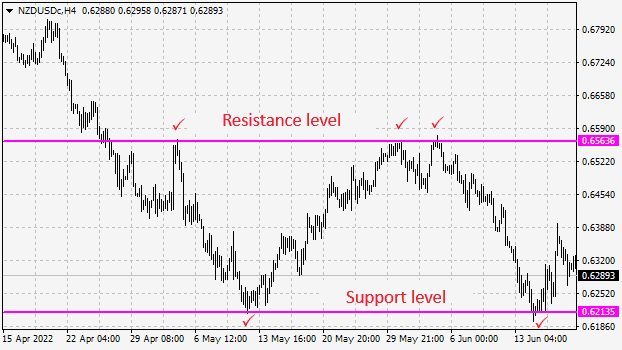
As the name suggests, horizontal levels are formed on a horizontal plane when there are two or more extrema. The extrema do not have to match perfectly, but they should be roughly at the same level within reasonable limits. As mentioned earlier, the strongest levels are formed on higher timeframes, from H4 and above.Horizontal support levels are drawn using the lower extrema (troughs), while resistance levels are drawn using the upper extrema (peaks).
Sloping Support and Resistance
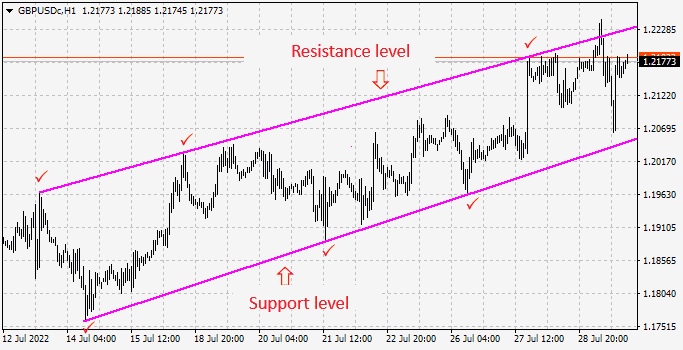
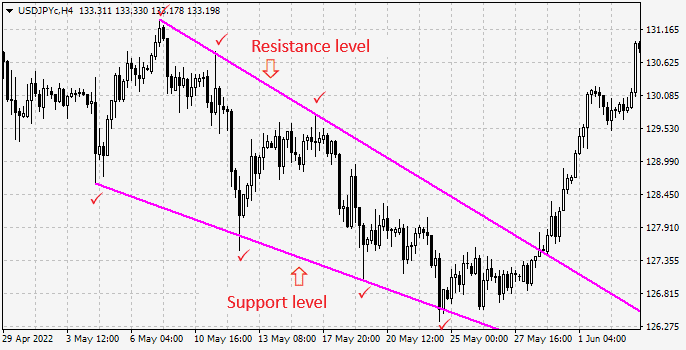
Sloping support and resistance are formed by two or more extrema by drawing a line through them on the chart.Sloping support is drawn through the lower extrema, while sloping resistance is drawn through the upper extrema.
Role Reversal Levels
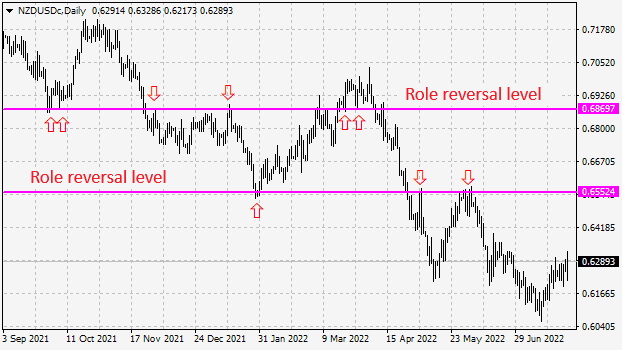
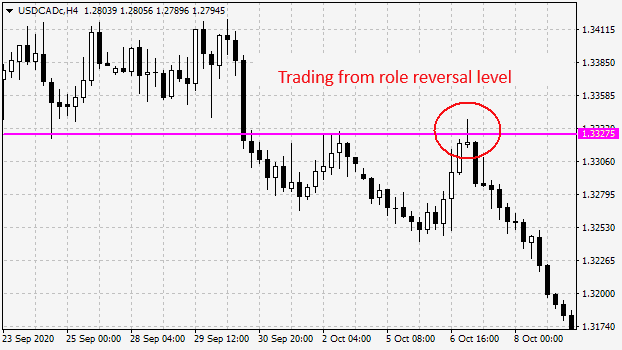
A role reversal level is called so because it was once a support level, but the price broke through it, closed on the other side of the level, and tested it from the other side, turning support into resistance. Conversely, a level could have been resistance, but the price broke through it, closed on the other side of the level, and tested it from the other side, turning resistance into support.After a breakout, the level should be tested — meaning the price returns to it, bounces off, and remains on the other side of the level for some time. The price can also change the level multiple times, from support to resistance and back.
How to Trade Using Levels
Trading Horizontal Levels
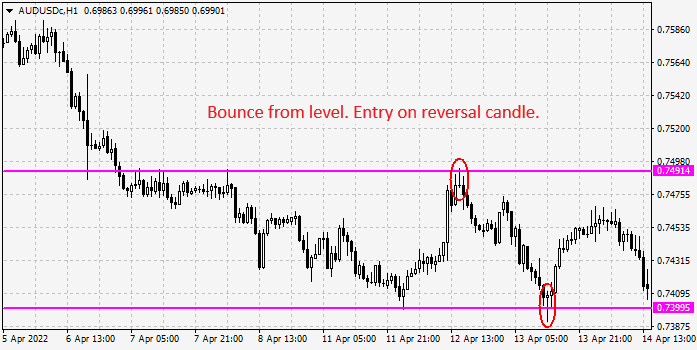
A bounce from the level can be traded immediately after the price touches the level, but it is preferable to wait for the formation of a reversal pattern (e.g., pin bar, engulfing, 123 pattern, etc.) at the level. Additionally, when the price approaches the level, you can switch to a lower timeframe and look for an opportunity to enter a trade there.
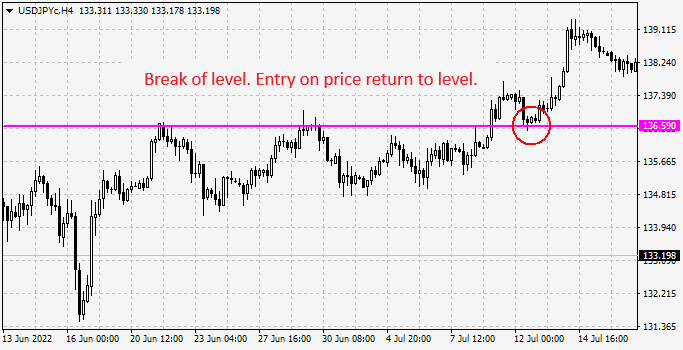
When trading a breakout, a trade can be opened immediately at the moment the price crosses the level, but it is better to wait for the breakout and the price to hold on the other side of the level, and only then look for an opportunity to enter in the direction of the breakout.
Trading Sloping Support and Resistance
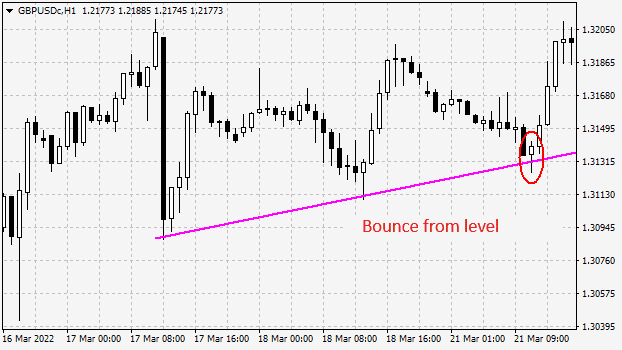
A bounce from the sloping support or resistance can be traded either immediately when the price touches the level or after the formation of a reversal setup. You can also switch to a lower timeframe and look for a reversal pattern there, which allows for a smaller stop loss.
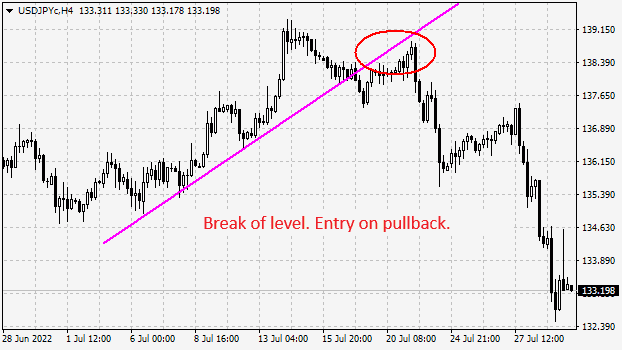
When trading a breakout of the sloping support or resistance, it is better to wait for the breakout to complete and then look for an entry on the pullback in the direction of the breakout.
Trading Role Reversal Levels
It is best to trade the role reversal level once it is fully formed and the price makes a pullback to the level after a breakout. An order can be opened either on a touch of the level or after a reversal pattern forms on the current or a lower timeframe.
- ✅ Pin Bar, Hammer, Shooting Star
- ⚡ Outside and Inside Bars
- 🌐 Railroad Tracks and Tweezer
- 💱 Trend Lines





 Reviews:
 Reviews:
 Reviews:
 Reviews: